

 Facebook
 X
X
 Pinterest
 Copy Link
Start with a Smart Declutter
Before you can organize, you need to declutter. The less you have, the less you have to store. Involve the whole family in this process. Set a timer for 15 minutes in a single room and have everyone find items to donate, toss, or put away. Making this a regular, quick activity prevents it from becoming an overwhelming weekend project. Focus on one small area at a time, like a single drawer or shelf, to make steady progress without the stress.
Master the Entryway
The entryway is often the first place clutter accumulates. Tame this high-traffic zone with a dedicated system. Install a row of hooks—one for each family member—for coats, backpacks, and bags. Use a shoe rack or a large basket to keep footwear off the floor. A small console table with drawers can hold keys, mail, and other small items that need a home. This creates a functional “drop zone” that stops clutter before it spreads through the house.
Maximize Your Living and Kids’ Rooms
Multi-functional furniture is a game-changer for family living areas. Opt for an ottoman with built-in storage to hide away blankets, board games, or video game controllers. In kids’ rooms, use vertical space to your advantage. Tall bookshelves and wall-mounted shelves can hold books and display favorite toys. Cube storage units are fantastic for organizing toys, and you can use fabric bins to sort smaller items like building blocks or art supplies.
Another great trick for kids’ rooms is an under-the-bed storage system. Rolling drawers are perfect for stowing away seasonal clothing, extra bedding, or toys that aren’t in daily rotation. This frees up valuable closet and floor space.
Streamline the Kitchen
The kitchen is the heart of the home, but it can quickly become disorganized. Use clear containers for pantry staples like pasta, rice, and cereal. This not only looks neater but also allows you to see what you have at a glance, preventing you from buying duplicates. Install a magnetic strip for knives to free up counter or drawer space. Inside cabinets, use stackable shelves to double your storage capacity for plates and bowls. Don’t forget the back of your pantry door—an over-the-door organizer is perfect for spices, jars, and snacks.
The Power of Labeling
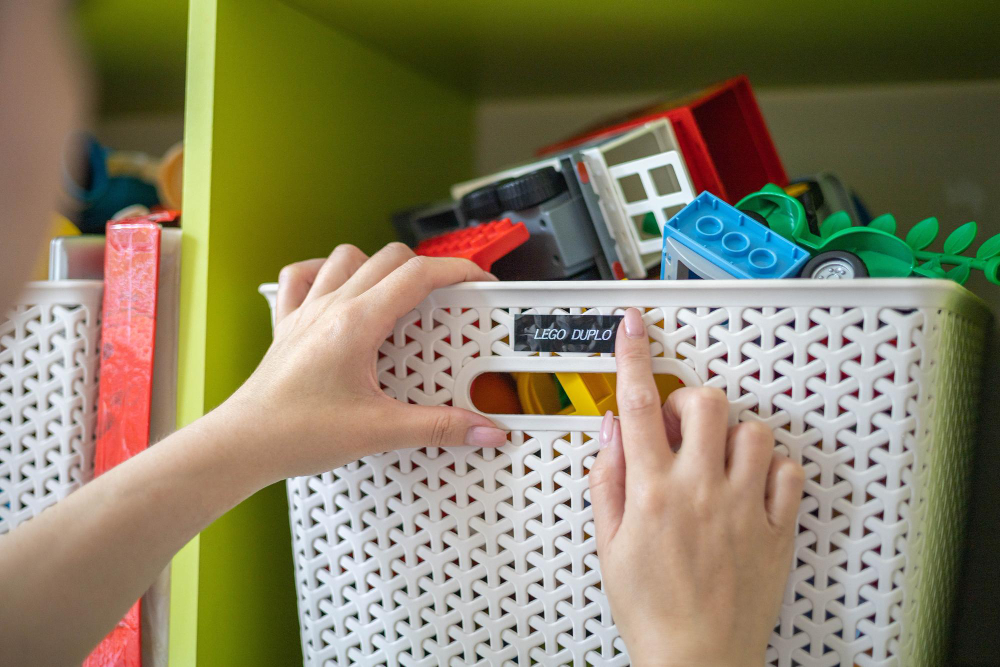
Once you have a system in place, labeling is the final step to ensure it sticks. Use a label maker or simple masking tape and a marker to label bins, baskets, and shelves. This is especially helpful for kids, as it empowers them to find what they’re looking for and, more importantly, put it back where it belongs. When everyone knows where things go, cleanup becomes a much faster and smoother process for the whole family.


